
Fast and Loose!
A Question of Defamation

Introduction
Both the EBLN and SBLN projects have been in the news recently. Here’s a synopsis:
EBLN
Protesters in Barton Hill have once more been active. Ed Plowden has been urging residents to inform the police when fellow residents vandalise road signs. After a flurry of activity yesterday it seems that the new EBLN measures are now nearing completion on Marsh Lane and Avonvale Road and relevant surrounding streets. For more information see the East Bristol Open Roads Facebook group. As members there note, the council sure is desperate to get these ‘modal filters’ installed in a hurry.
Melissa Topping and Katie Sullivan, residents of Barton Hill who are well-known to our readers, have announced they will be pursuing legal action if the EBLN is made permanent this summer. The barrister who successfully represented the challenge against Croydon Council’s implementation of LTNs at the High Court believes there are grounds for bringing a case against BCC.
SBLN
Readers will also be very familiar with the serious questions which have arisen regarding the council’s interpretation of their own traffic data in Southville, the chosen area for their second ‘liveable neighbourhood’. Since these concerns were published on this blog they have been aired more widely in the local press. See here and here.
Claiming they have been listening to Southville residents, BCC has made some changes to the plans, which don’t quite look like the ‘U-turn’ the press has announced them to be. It has simultaneously published two new sets of traffic data which it had previously withheld for unknown reasons. On the surface they appear to show the claimed high percentage of through traffic in the area, but under inspection once more completely fail the test. (More to come on that in a future post.)
Transport and Connectivity Committee Meeting
With all this activity, this afternoon’s Bristol City Council (BCC) Transport and Connectivity Committee meeting has evidently drawn more attention than usual. Although the public forum has not yet been published, there are indications around 125 questions have arrived in Ed Plowden and Adam Crowther’s inboxes. Interestingly, my statement has been redacted because one phrase was ‘possibly defamatory’. Others have had whole questions not just redacted, which is the standard procedure, but actually disallowed - for the same reason. One has to wonder why?
Today’s piece addresses one of these questions.
So now over to Matt Sanders, author of The Fundamental Lie, on his efforts to bring more puzzling facts about the council’s own traffic data - this time in support of the introduction of a swathe of new 20mph speed limits around Bristol.
Please note the link at the end to the council’s consultation on the changes, which closes in just a few days on 17th May. Feel free to refer to Matt’s research in your responses.
I was recently looking at Bristol City Council’s 20mph Speed Limit Consultation — and noticed that, once again, the Council is playing fast and loose with its facts and figures…!
On 8th May, I therefore submitted a public forum question, for the following week’s meeting of the Transport & Connectivity Policy Committee.
However, on 13th May I was advised by the committee secretary, that this question has been rejected,
“… as it could be defamatory.”
No attempt was made, to explain which part is “defamatory”, and why.
No attempt was made, to redact “defamatory” words or sentences.
Instead, the entire question was rejected — so does not appear in the meeting’s published papers.
To draw your own conclusions about the Council’s motives for rejecting this question, please read on…
A QUESTION from MATT SANDERS:
“20mph Consultation — Misleading Statistics”
The Council is consulting on proposals for new 20mph speed limits on over 100 roads, as seen here: https://www.bristol.gov.uk/20mph/whats-changing
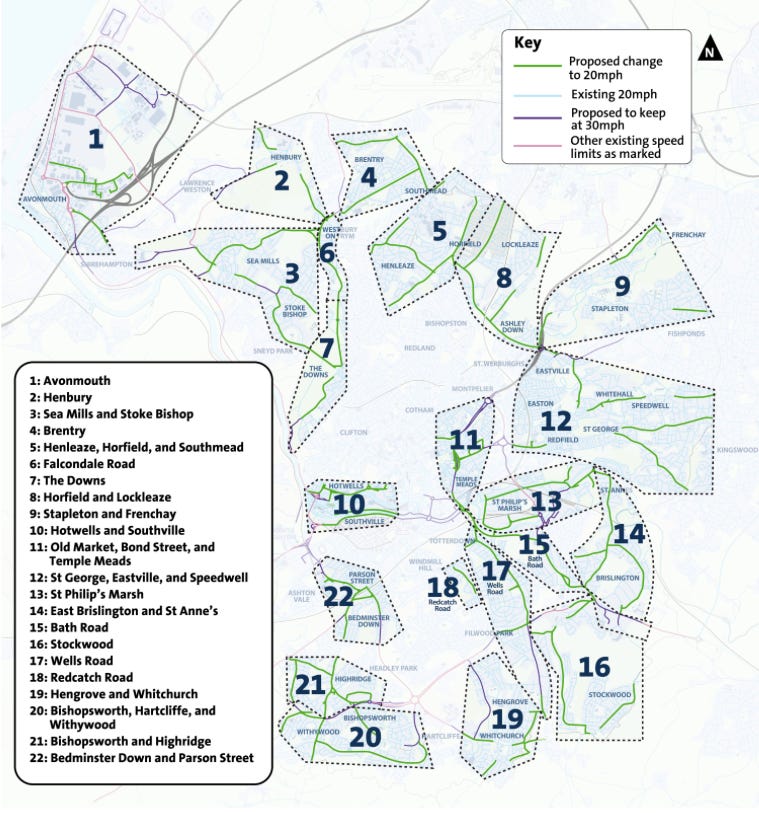
Some excellent generic reasons are put forward, for reducing speed limits, and I agree with many of them.
However, as with the SBLN Consultation, this one is fundamentally compromised, by the publication of false statistics, and misleading interpretations, which will undoubtedly skew the results.
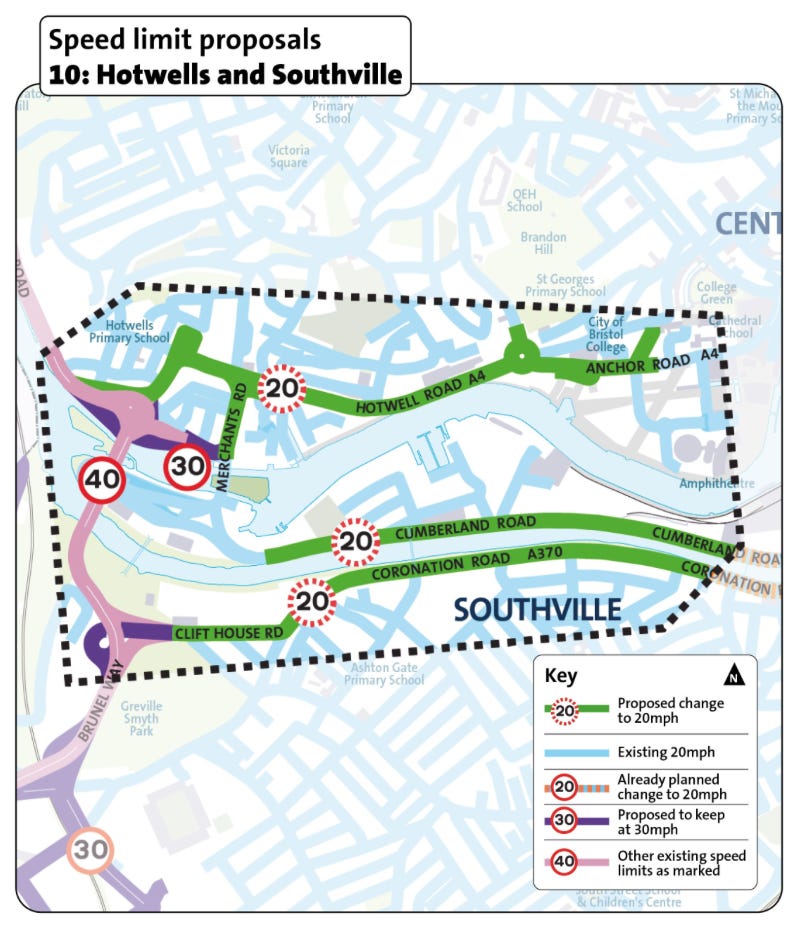
— Coronation Road
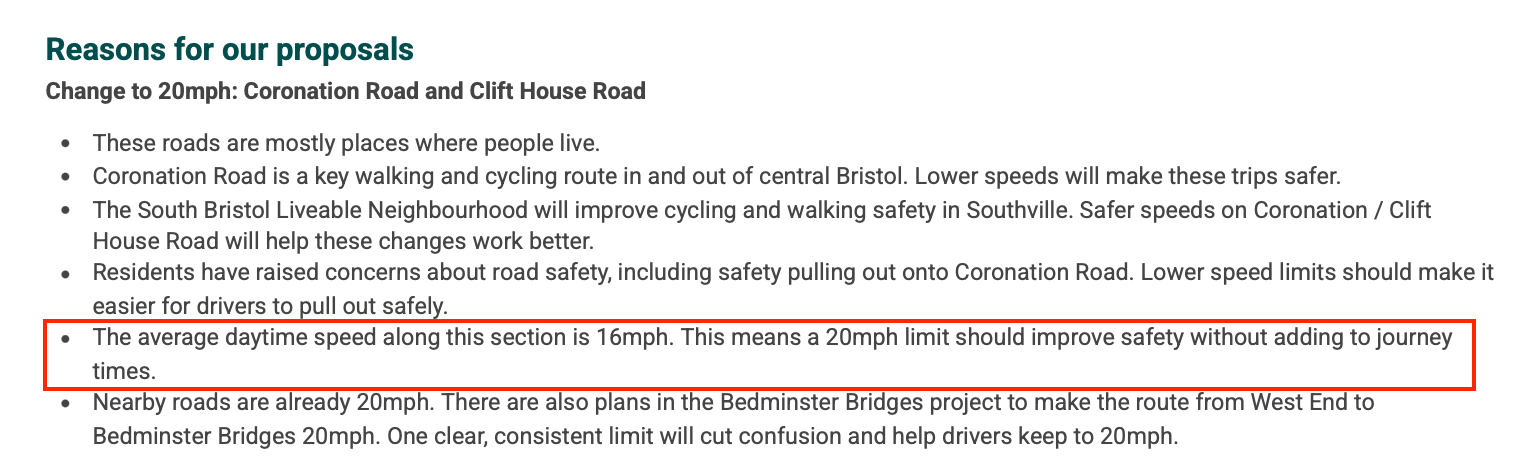
The page relating to Coronation Road includes the following two claims:
“The average daytime speed along this section is 16mph. This means a 20mph limit should improve safety without adding to journey times.”
Let’s gloss over the sneaky cherry-picking of “daytime” speeds — which tend to be lower than night-time, due to congestion — and address the second point first:
— “Without adding to journey times”
If ALL the vehicles on Coronation Road were going at 16mph all the time, then yes — changing the speed limit to 20mph would have no effect on journey times.
But they are not.
Vehicles are travelling at all different speeds on this 30mph road, depending on the time of day, and the amount of congestion, etc.
To make the maths easy, let’s first assume that half of the vehicles are going at 6mph, and the other half at 26mph. The average speed is then 16mph.
But if a 20mph speed limit is imposed, then half of the vehicles will have to go slower.
So this DOES add to the journey times — for HALF of all drivers.
— The Fundamental Fallacy
The claim is therefore a fundamental fallacy.
It is plausible enough to trick most people — including me, when I first read it.
But it is NOT TRUE.
Either the Transport officers understand this point, and are deliberately presenting misleading information — or they do not understand this point, so aren’t qualified to do their jobs.
— So what about the numbers…?
In June 2024, the Council placed Automatic Traffic Count devices (rubber strips on the road) at numerous locations throughout South Bristol.
ATC Site 9 was on Coronation Road, and shows that two-thirds of vehicles were legitimately driving at speeds in the 20-30mph range.
ALL of those vehicles would be slowed down by a 20mph speed limit,.
So TWO-THIRDS of journey times would become longer.
— “The average daytime speed…”
But how can this be true, if the “average daytime speed” is only 16mph?
Well…
In this ATC study, the Two-Way 7-Day Speed Summary for 7am - 7pm has a Mean Speed of 22.23mph.
For the full 24 hours, it is 23.40mph.
In layman’s terms, that is known as “faster” than 16mph.
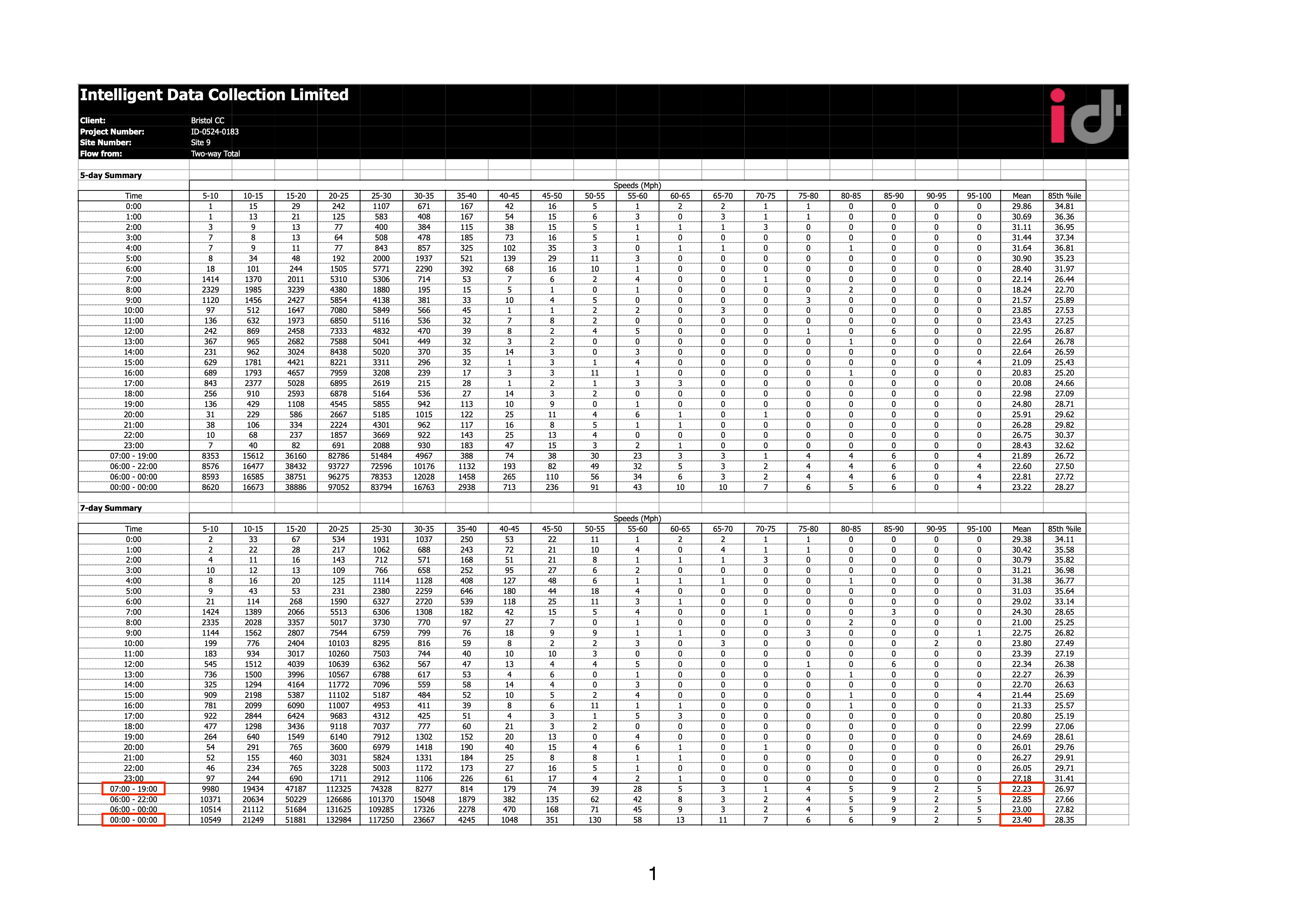
— Lies, Damned Lies and Statistics.
So — according to this data, collected by the Council in June 2024 — the daytime average of 16mph is a LIE.
And even if it were true, the claim about not affecting journey times is also a LIE.
— Other Roads
Here are some more claims, being made in this Consultation…
“Bishopsworth Road: Average daytime speed along this section is around 19mph. This means a 20mph limit should improve safety without adding to journey times.”
“Parson Street, Bedminster Down, and Bedminster Down Road: Average daytime speed along these roads is below 18mph. This means a 20mph limit should improve safety without adding to journey times.”
“Winterstoke Road: Average daytime speed along this section of Winterstoke Road is around 17mph. This means a 20mph limit should improve safety without adding to journey times.”
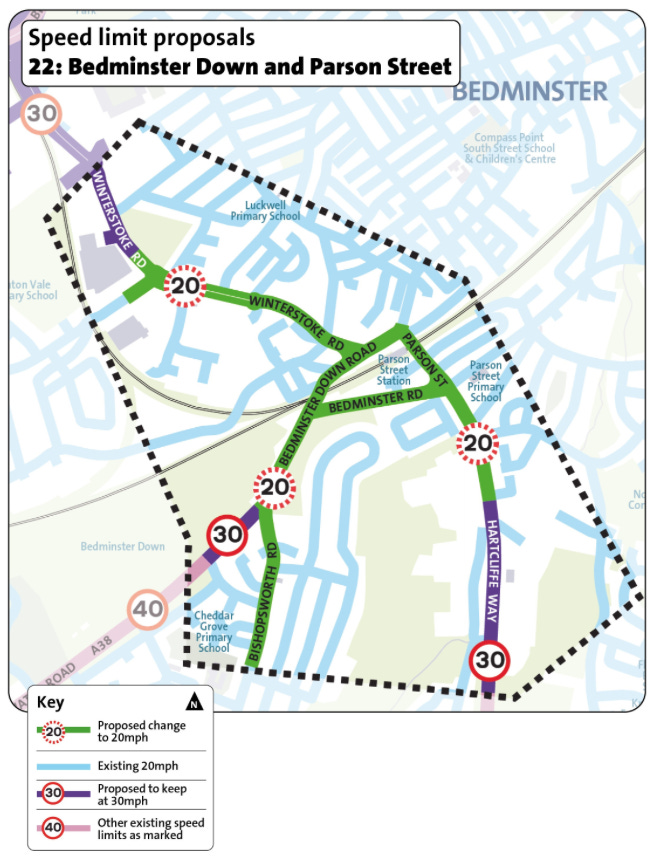
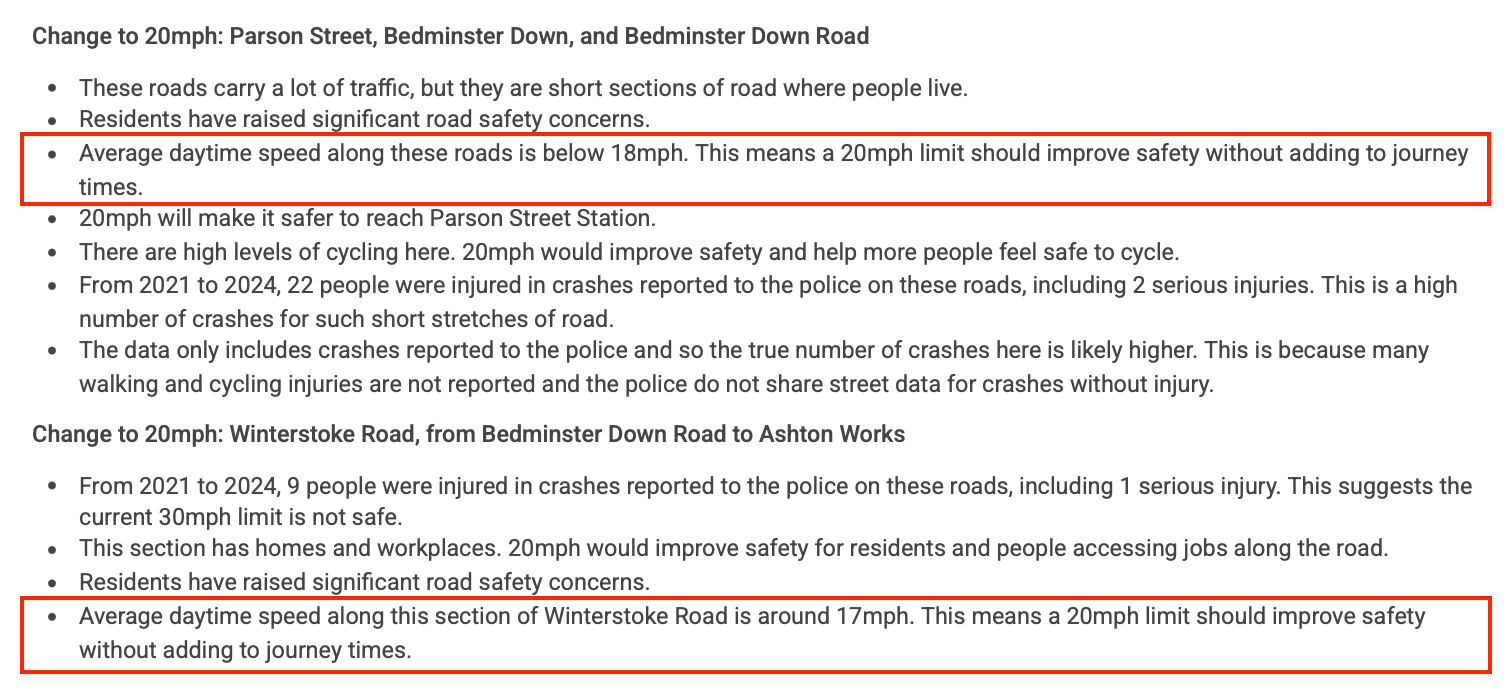
If 16mph was wrong in Coronation Road, how can we trust any of these other claims?
(I’ll ask my data-friends to investigate further, using the SBLN ATC data…)
But the bottom line is that the entire Consultation is fundamentally flawed — and everybody is being tricked into supporting these measures, on false pretences.
— QUESTION:
Please explain EXACTLY which counters, which filters, and which methodology produced each of the average speeds quoted above.
So that was my Question, to the Transport Dept of Bristol City Council.
And surely — if they were able to demonstrate the provenance of the Consultation’s quoted average speeds — then it was in the Council’s interest, to provide a full and frank response to this question.
Indeed, such a response would have easily debunked any “defamatory” claims which I may have made.
But the Council didn’t do that.
Instead, they rejected the entire question, and refrained from publishing it in the committee papers.
However, in the days since this question was submitted, independent data analyst Ali Bin Shahid has examined several of the June 2024 ATC traffic data spreadsheets, published on the Council’s website, to establish the real statistics for additional roads, including Redcatch Road…
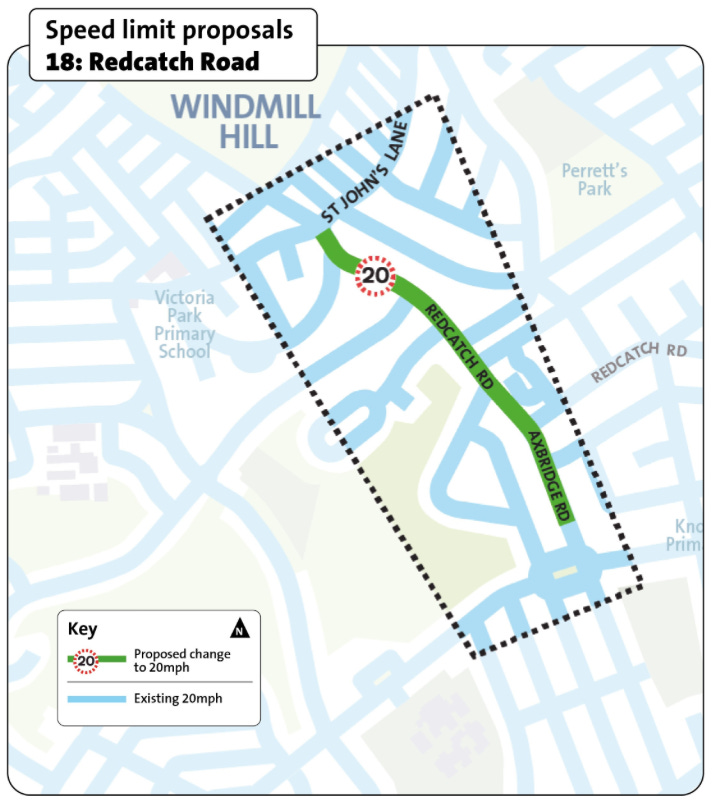
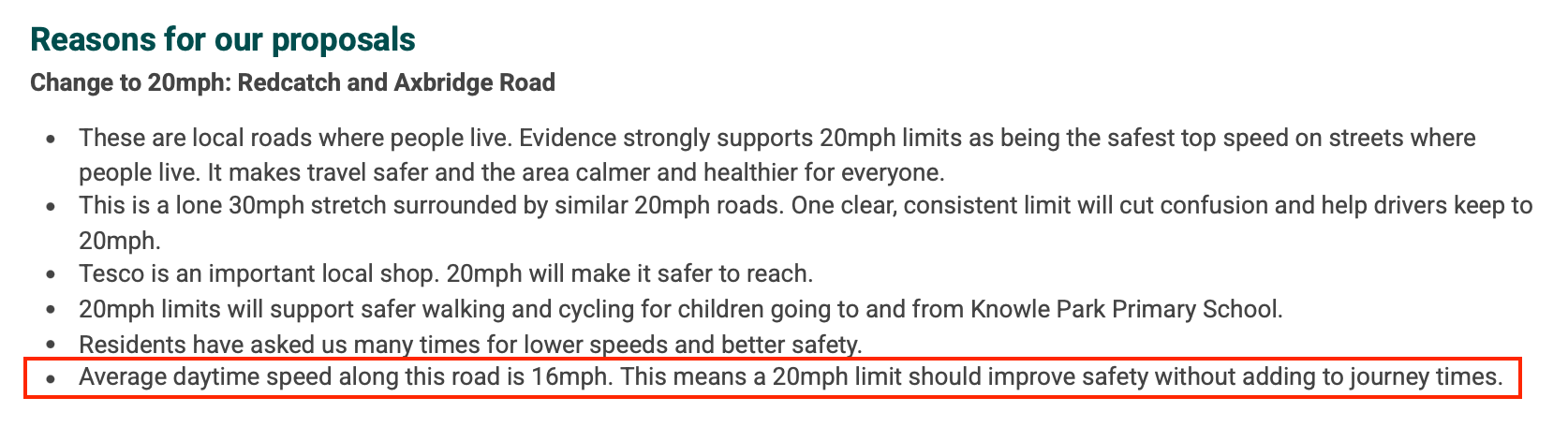
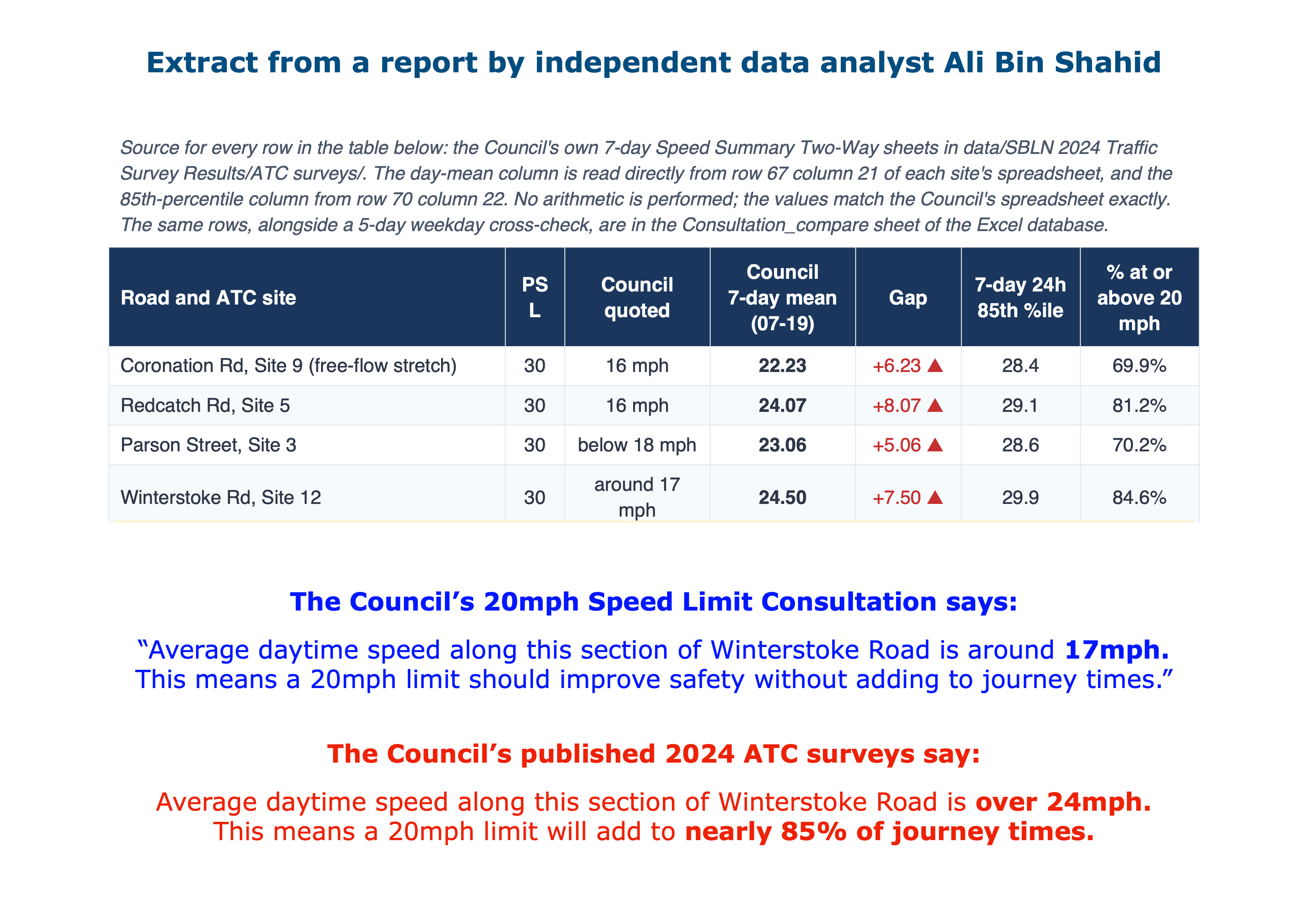
In every street which was examined, the current “average daytime speed” is considerably higher than that which is stated in the Consultation.
In some cases, the real speed is 50% faster than the fantasy one!
Yet for many participants in this Consultation, the assurance that journey times would not be increased, will have tipped the balance, and won their support.
In this Consultation, the “without adding to journey times” claim is made for 106 roads, throughout the city.
Yet regardless of the “average” speeds, all of those roads will have some proportion of vehicles driving faster than 20mph. So imposing a 20mph cap would obviously “add to journey times” for those drivers.
So the entire Consultation has been fatally compromised, by this misleading text.
To end with, we have to ask just one fundamental question:
If there were to be no increase in journey times — then there would be no decrease in speed.
So why do it?!
To have your say, go to the Consultation NOW!
It closes on Sunday, 17th May.
Matt Sanders